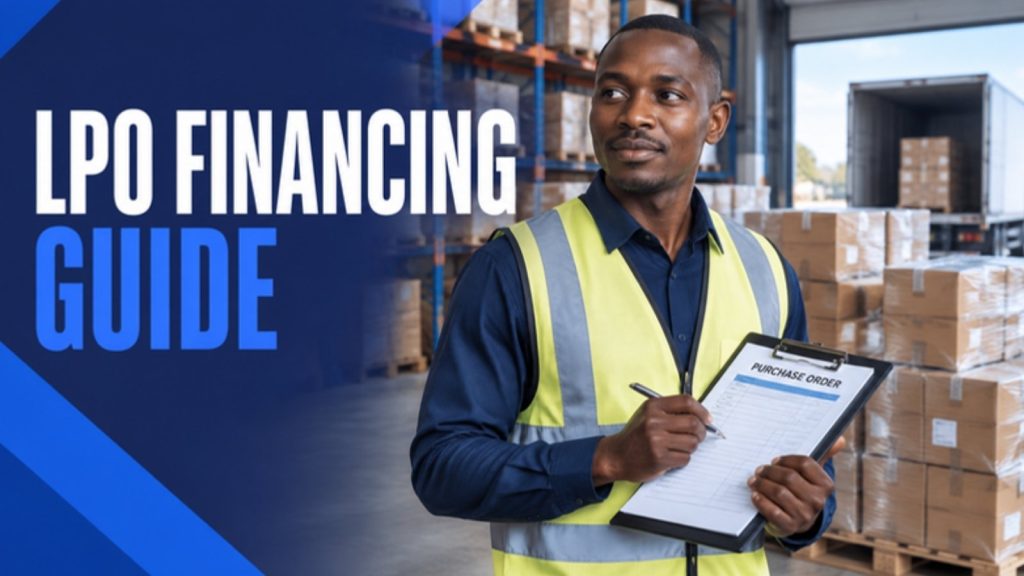
It’s Tuesday morning. The email lands: “Please find attached the Local Purchase Order.” Tumeshinda! You read it twice, forward it to your partner, and then the second feeling arrives. The order is for goods you don’t have, from a supplier who wants cash upfront, and the buyer pays 60 days after delivery. The LPO is worth millions. Your account balance is not. This is exactly the gap that LPO financing in Kenya was built to close.
This guide covers everything a Kenyan SME, trader or sole proprietor needs to know: what an LPO is, how LPO financing works step by step, who qualifies, the documents you’ll need, what it costs, the mistakes that get applications declined, how it compares with other facilities, and a practical plan for your next order.
What Is an LPO? (LPO Meaning in Business, Tenders and Finance)
LPO stands for Local Purchase Order. It is a formal document a buyer issues to a supplier, confirming that they want to buy specific goods, in specific quantities, at an agreed price, on stated delivery and payment terms. Once you accept it, it is a commitment on both sides.
A typical LPO shows:
- the buyer’s name, address and LPO number;
- the supplier’s name;
- the description, quantity and unit price of each item;
- the total value, including or excluding VAT;
- the delivery location and deadline;
- the payment terms, for example 30, 60 or 90 days after delivery; and
- the authorised signature and stamp.
LPO meaning in a tender
In public and private procurement, the LPO is usually what you receive after you win. The tender process ends with an award, and the LPO (for goods) or an LSO, a Local Service Order (for services), is the instruction to deliver. That’s why so many suppliers search for “LPO meaning in tender”: the LPO is the moment the win becomes real, and also the moment the cash problem starts. We told that story in you won the tender, now what?
LPO meaning in finance
In finance, an LPO is evidence of a future receivable. A creditworthy buyer has committed to pay for goods once they’re delivered. A financier can look at that commitment and fund the purchase of the goods, then get repaid when the buyer pays. That is LPO financing.
What Is LPO Financing?
LPO financing is short-term working capital that lets you buy the goods needed to fulfil a confirmed purchase order. Instead of waiting until you have the cash, or turning the order down, a financier funds part of the order value so you can pay your supplier, deliver to the buyer and get paid. When the buyer pays, the facility is settled and the balance is yours.
At Discount Capital, LPO financing provides up to 80% of the LPO contract value for qualifying SMEs, individual traders and sole proprietors. It is a receivable-based facility: the decision leans heavily on the strength of the order and the buyer behind it, not only on your own balance sheet.
The core idea is simple. Most suppliers don’t have a profit problem. They have a timing problem. Money goes out to the supplier today, and comes in from the buyer weeks or months later. LPO financing bridges that gap.
How LPO Financing Works, Step by Step
Here’s the typical journey from LPO to payment.
Step 1: You receive a confirmed LPO
A buyer, such as a government entity, a corporate or an established private business, issues you a signed LPO. Check it carefully: quantities, prices, delivery dates, payment terms and signatures.
Step 2: You get supplier quotations
Get a pro forma invoice or quotation from your supplier for the goods. The difference between what you pay the supplier and what the buyer pays you is your margin, and it needs to cover the financing cost and still leave you a profit.
Step 3: Check your qualification online
At Discount Capital, the first step is a short online qualification check, which takes less than three minutes to complete.
Step 4: Meet a representative and submit documents
Once you’re pre-qualified, a representative schedules an appointment and reviews your KYC documents and the transaction itself: the LPO, the supplier quote, your bank or M-Pesa statements and the buyer’s profile.
Step 5: Approval and offer letter
If the application is approved, you receive a letter of offer setting out the amount, the pricing, the security and the repayment arrangement. Read it fully before you sign.
Step 6: Payment is assigned
The buyer’s payment is assigned to Discount Capital, or to an escrow account over which Discount Capital has equal control. This is what makes LPO financing work: the repayment comes from the very transaction being funded.
Step 7: Funds are released and you deliver
Funds are deposited and you use them to buy the goods. You deliver to the buyer and get the delivery note signed and stamped, then invoice the buyer.
Step 8: The buyer pays and the facility closes
When the buyer pays into the assigned account, the financed amount and charges are settled, and the balance comes to you. Your margin, which you couldn’t have earned without the order being funded, is now real money.
An illustrative example
Wanjiku runs a supplies business. She wins an LPO from a county institution for office furniture worth KSh 2,000,000, payable 60 days after delivery. Her supplier needs KSh 1,500,000 upfront. She has KSh 400,000 in the business account. Without financing, she has two bad options: turn the order down, or deliver part of it late and damage the relationship.
With LPO financing of up to 80% of the order value, the gap is covered. She pays the supplier, delivers on time, invoices the county, and when payment comes in, the facility and its charges are settled from it. She keeps the remaining margin and, just as important, a buyer who now knows she delivers. (This example is illustrative only. Actual amounts, terms and approval depend on assessment.)
Who Qualifies for LPO Financing in Kenya?
Every financier sets its own criteria. At Discount Capital, the published eligibility criteria for LPO financing include:
- the business has been operating for at least one year;
- individual customers are at least 21 years old;
- a banking history of at least six months with your current bankers;
- no more than three unpaid items, and no more than two excess drawings, in the last six months;
- no past-due LCs, loans or interest arrears in the last six months;
- regular, consistent credits into your account over the last 12 months, without a declining trend;
- maximum monthly repayments not exceeding 30% of average monthly turnover over the last 12 months;
- a debt servicing capacity ratio not exceeding 50%;
- not being on the prohibited list in the credit policy; and
- Kenyan nationality.
Two things sit behind all of those criteria. First, is the buyer creditworthy and likely to pay? Second, does your account history show a business that is actually trading and managing its money responsibly? If your bank has turned you down even though your buyer is solid, read your bank said no, your buyer is creditworthy.
LPO Financing Requirements: The Documents Checklist
Have these ready before you apply. Missing documents are the most common reason a good transaction moves slowly.
Application and KYC documents
- completed application form;
- copy of national ID or passport;
- Memorandum and Articles of Association (MemArts), or CR1 and CR2;
- Certificate of Incorporation;
- bank or M-Pesa statements for the last six months;
- KRA PIN certificates for the company and its directors;
- trading licence or utility bills;
- two passport-size photos;
- management accounts, if available; and
- company profile, if available.
Transaction documents
- the signed and stamped LPO;
- the supplier’s quotation or pro forma invoice;
- any contract or tender award letter linked to the LPO; and
- evidence of past supply to the same or similar buyers, if you have it.
Security and facility documents
- securities as set out in the credit policy;
- assignment of the buyer’s payment to Discount Capital, or to an escrow account with equal control;
- copy of comprehensive insurance cover;
- personal insurance for individuals;
- the signed letter of offer; and
- standard Discount Capital facility documents.
Is unsecured LPO financing available in Kenya?
Many people search for “unsecured LPO financing”. In practice, the main comfort in LPO financing comes from the transaction itself: the buyer’s commitment and the assignment of their payment. That’s why it is often more accessible than a traditional loan secured against property. But every facility still has security and documentation requirements, set according to the credit policy and the specific transaction. Ask for the exact requirements for your case rather than relying on a headline.
What Does LPO Financing Cost?
Always look at the full cost, not just the headline rate. At the time of writing, Discount Capital’s LPO financing page sets out the pricing as follows:
- Interest: a minimum of 3% per 30 days, or part thereof, charged on the financed amount. Lower rates may be considered with exceptional approval.
- Arrangement fee: 1% to 3%, with a minimum of KSh 5,000. Fees are negotiable for the duration of the offer letter, depending on the client relationship.
- Default rate: an additional 2% over the standard rate, applied after a 30-day grace period from the due date.
Check the product page and your offer letter for the current terms, because pricing applies to your specific approval.
How to work out whether an LPO is worth financing
Before you apply, do this simple calculation:
- Take the LPO value (what the buyer will pay you).
- Subtract the cost of the goods from your supplier.
- Subtract transport, packaging, labour and other delivery costs.
- Subtract the financing cost, based on how many 30-day periods you realistically expect before the buyer pays.
- What’s left is your real margin.
The key word is realistically. If the LPO says 30 days but this buyer usually pays in 75, cost it at 75. If the margin still works, the order is worth funding. If it only works when everything goes perfectly, think again. Good planning before you bid is what separates growing suppliers from struggling ones, as we explain in why financial planning makes or breaks your next tender.
Common Mistakes That Get LPO Financing Declined or Delayed
- Thin margins. If the order barely covers the goods, there’s no room for financing costs or delays.
- An unknown or weak buyer. LPO financing depends on the buyer’s ability and willingness to pay.
- Incomplete or unsigned LPOs. An LPO without the right signature, stamp or reference number is hard to rely on.
- Messy account history. Bounced cheques, unpaid items and excess drawings in the last six months count against you.
- Mixing personal and business money. It hides your real turnover and makes your statements harder to assess.
- Applying at the last minute. If delivery is due next week, there may not be enough time to assess, document and disburse.
- Diverting the funds. Using LPO money for rent, salaries or another order leaves the funded order undelivered and the facility unpaid.
- Not reading the offer letter. Know the rate, fees, repayment mechanism and what happens if the buyer pays late.
Red Flags in an LPO Itself
Not every LPO is a good LPO. Be cautious if:
- the buyer has a history of paying suppliers very late, or not at all;
- the delivery deadline is unrealistically short for the goods involved;
- the specification is vague and could lead to rejected deliveries;
- the price is so low you suspect someone made a mistake;
- the LPO came through an intermediary rather than directly from the buyer; or
- you can’t verify the person who signed it.
A financier will look at the same things, so dealing with them before you apply saves everyone time.
LPO Financing vs Other Ways to Fund an Order
LPO financing vs invoice discounting
The difference is timing. LPO financing funds you before delivery, so you can buy the goods. Invoice discounting funds you after delivery, against the invoice you’ve issued to the buyer. Many suppliers use both: LPO financing to deliver, invoice discounting to stop waiting on the buyer’s payment terms. Our guide to invoice discounting covers the second half of that cycle.
LPO financing vs a business loan
A traditional business loan is assessed mainly on your business and your security, and repaid in instalments whether or not a particular order pays. LPO financing is tied to one transaction and is repaid from that transaction’s proceeds. For suppliers whose cash flow arrives in lumps from large buyers, that match often makes more sense.
LPO financing vs supplier credit
If your supplier will give you credit, use it. But supplier credit has limits, and a cash-strapped supplier is a risk to your own delivery, as we explored in your suppliers are cash-strapped: that’s your supply chain problem. Paying upfront can also win you a better price, which improves your margin.
Where contract guarantees come in
Many tenders ask for a bid bond before you can bid and a performance bond before you can start. These are not financing; they are guarantees. Discount Capital facilitates contract guarantees, including bid bonds and performance bonds, for qualifying businesses. All guarantees are subject to assessment, documentation, approval and applicable terms. If you’re unsure which you need, read bid bonds vs performance bonds in Kenya.
How to Choose an LPO Financing Provider in Kenya
When you compare providers, ask:
- What percentage of the LPO value do you fund? And is that before or after VAT?
- What is the full cost? Interest, arrangement fees, legal fees, insurance and any other charges, all in writing.
- How is interest calculated? Per 30 days, per month or per transaction, and on what amount?
- What happens if the buyer pays late? Ask about grace periods and default rates.
- Do you understand my buyers? A provider familiar with government, county and corporate payment cycles will assess your LPO more realistically.
- How long is the limit valid? Can you reuse it for repeat orders from the same buyer?
- Who will I deal with? A named person who picks up the phone matters when a delivery is due.
Limit validity and repeat orders
At Discount Capital, LPO financing limits are reviewed according to your relationship and the buyer. For a new customer, or a new procuring entity, the limit is available for six months, then renewed for six months, then annually with fresh bank statements. For an existing customer with an existing procuring entity, the limit runs for 12 months and is renewed annually with fresh bank statements. For suppliers who receive regular LPOs from the same buyer, that makes repeat orders much smoother.
Realistic Timeline: From LPO to Payment
Every transaction differs, but the phases look like this:
- Day 0: LPO received. Check it, get the supplier quote, run your margin calculation.
- Same day: complete the online qualification check.
- Next few days: meet the representative, submit documents and the transaction details.
- Assessment and approval: the time depends on how complete your documents are and how well known the buyer is.
- Disbursement: after the offer letter is signed, the payment assignment is in place and the facility documents are complete.
- Delivery: on the LPO’s timeline.
- Buyer payment: per the LPO terms, or as the buyer actually pays.
The best time to start is the day the LPO arrives, not the week delivery is due. Haraka haraka haina baraka, but neither does waiting until Friday afternoon.
A Practical Plan for Your Next LPO
Before you bid
- Get firm supplier prices and lead times.
- Build financing costs into your bid price.
- Check whether the tender needs a bid bond or performance bond, and plan for them early.
- Find out how quickly this buyer really pays.
When the LPO arrives
- Check every detail on the LPO against your bid.
- Run the real margin calculation.
- Complete the qualification check and gather your documents.
During delivery
- Use the funds only for the goods on the order.
- Keep delivery notes, signed and stamped.
- Invoice the buyer immediately after delivery.
After payment
- Confirm the facility is settled and the balance received.
- Record the actual margin and payment days for next time.
- Keep your account clean for your next application.
Managing cash between orders is the other half of the job. Our article on why cash flow, not profit, is the biggest threat to Kenyan SMEs covers that side.
Frequently Asked Questions About LPO Financing
How does LPO financing work?
A financier funds part of a confirmed purchase order so you can buy the goods and deliver. The buyer’s payment is assigned to the financier, or to a jointly controlled escrow account. When the buyer pays, the facility and charges are settled and the balance is paid to you.
How much of an LPO can be financed?
Discount Capital provides up to 80% of the LPO contract value for qualifying businesses. The amount for a specific transaction depends on assessment of the buyer, the order and your business.
Can sole proprietors get LPO financing?
Yes. Discount Capital’s LPO financing is available to SMEs, individual traders and sole proprietors who meet the eligibility criteria, including at least a year in operation and six months’ banking history.
Is LPO financing a loan?
It is a form of short-term credit, but it is tied to a specific purchase order and repaid from that order’s proceeds, rather than through fixed monthly instalments over a long term.
What is the difference between an LPO and an LSO?
An LPO (Local Purchase Order) is issued for goods. An LSO (Local Service Order) is issued for services. Both are buyer commitments that confirm what is required, the price and the payment terms.
Win the Order. Fund the Delivery.
An LPO is proof that a buyer trusts you to deliver. LPO financing makes sure a cash gap doesn’t stop you. Check the order, cost it honestly, prepare your documents, and apply early. For more on how the facility works for traders and sole proprietors, see our LPO financing facility guide and our earlier overview of LPO financing for growing businesses.
Ready to fund your next order? Start with the three-minute LPO financing qualification check, or talk to our team through the Discount Capital contact page. All facilities are subject to assessment, documentation and approval.
Discount Capital Limited | The SME Partner
📞 +254 713 383 855 | +254 711 093 106
📧 info@discountcapital.co.ke
📍 IKM Place, 4th Floor, 5th Ngong Avenue, Nairobi