
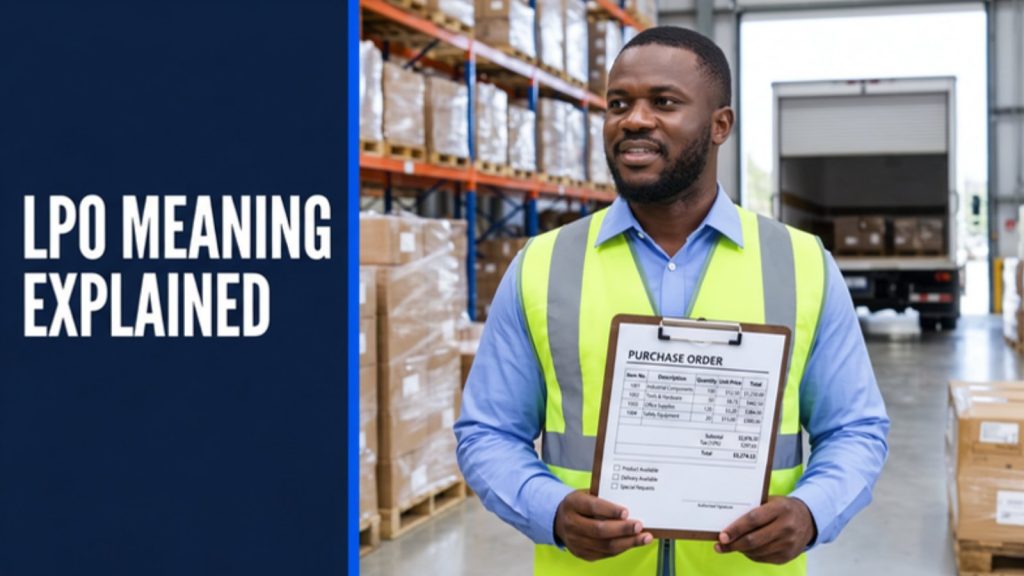
Someone in a suppliers’ WhatsApp group asks, “The client says they’ll send the LPO tomorrow. Do I start buying stock today?” Ten replies later, nobody agrees. One says an LPO is as good as cash. Another says, “Wait for the LPO, then wait for the money, then pray.” So let’s settle it. This guide explains the LPO meaning in business, in a tender and in finance, what the document actually commits a buyer to, how it differs from an invoice, a delivery note and a contract, and how Kenyan suppliers turn a good LPO into working capital.
If you already know the basics and want the full funding picture, our complete guide to LPO financing in Kenya walks through eligibility, documents, costs and a step-by-step plan. This article goes one level deeper on the document itself.
LPO Meaning in Business: What a Local Purchase Order Is
LPO stands for Local Purchase Order. It is a written instruction from a buyer to a supplier to supply specific goods, in a stated quantity, at an agreed price, to a named place, by a set date, on stated payment terms. The word “local” simply means the order is placed with a supplier in the same country, as opposed to an import order.
For the supplier, it is the document that turns a conversation, a quotation or a tender bid into a real order.
Three short examples show how it plays out:
- A school orders exercise books: 5,000 books at an agreed unit price, delivered before opening day, payable 30 days after delivery.
- A hospital orders cleaning supplies: a list of items delivered monthly for three months, with payment tied to each delivery.
- A construction firm orders cement: delivery to site, paid on a signed delivery note and invoice.
In each case, the buyer issues the LPO. The supplier receives it, checks it and decides whether to accept it.
LPO meaning in a tender
In tenders, the order of events matters. You bid, the tender is evaluated, you receive a notification of award, and then the procuring entity issues the LPO (for goods) or an LSO, a Local Service Order (for services). In many tenders, especially framework or supply-on-demand tenders, winning gives you the right to supply, but each LPO is what tells you to actually deliver something, and how much.
That is why “LPO meaning in tender” is such a common search. Many suppliers win a tender and then wait weeks for the first LPO, or receive several smaller LPOs over the year instead of one large order. Your cash planning has to follow the LPOs, not the tender award. We cover that planning in why financial planning makes or breaks your next tender.
LPO Meaning in Finance: A Promise of Future Payment
To a financier, an LPO from a creditworthy buyer is evidence that money is coming. It is not money yet. The buyer has committed to pay for goods once they are delivered to specification, so the LPO represents a future receivable that depends on you performing.
That last part is the key to the LPO financing meaning. LPO financing funds the gap between receiving the order and being paid for it. The financier looks at the buyer’s ability to pay, the details of the order, your margin and your track record, then funds part of the cost of the goods. When the buyer pays, the facility is settled from that payment.
What an LPO Commits the Buyer To (and What It Doesn’t)
Once a supplier accepts an LPO, it generally works as a binding commercial agreement on the terms written on it, together with any tender documents or framework contract it refers to. In practice, that usually commits the buyer to:
- accept goods that match the description, quantity and quality on the LPO;
- pay the stated price, not a lower figure decided after delivery;
- pay within the stated payment terms, once you have delivered and invoiced correctly; and
- honour the delivery location and timeline it set.
What an LPO does not do:
- It doesn’t pay you upfront. Unless the LPO says so, payment comes after delivery, often 30, 60 or 90 days later.
- It doesn’t protect a late or wrong delivery. If the goods are late, short or off-specification, the buyer may reject them or delay payment.
- It doesn’t guarantee the buyer pays on time. The commitment is there, but slow payers remain slow payers. Our piece on late supplier payments in Kenya explains the knock-on effect.
The exact position depends on the documents, so for a large or unusual order, get professional advice before you accept.
LPO vs Invoice vs Delivery Note vs Contract
These four documents travel together, and mixing them up causes most of the paperwork problems suppliers face when they try to get paid or get funded.
| Document | Who issues it | When | What it proves |
|---|---|---|---|
| Contract or tender award | Buyer and supplier (signed by both) | Before any order | The overall terms of the relationship |
| LPO | Buyer | Before delivery | What the buyer wants, at what price, on what terms |
| Delivery note | Supplier, signed by the buyer on receipt | At delivery | The goods actually arrived, in the stated quantity |
| Invoice | Supplier | After delivery | The amount now due for payment |
The contract sets the rules, the LPO places the order, the delivery note proves you performed, and the invoice asks to be paid. Buyers’ accounts teams usually match the LPO, delivery note and invoice before paying, so any mismatch in quantities or prices delays your money.
The same sequence decides which type of financing fits. Before delivery, you are funding against the LPO. After delivery, you are funding against the invoice, which is where invoice discounting in Kenya comes in.
How Suppliers Use an LPO to Get Financing
Here’s how a strong LPO becomes working capital at Discount Capital, based on what our LPO financing page sets out:
- Check the LPO and your margin. Confirm the details and work out what’s left after the cost of goods, delivery and financing.
- Complete the online qualification check. It takes less than three minutes.
- Meet a representative. After pre-qualification, your KYC documents and the transaction are reviewed.
- Receive funding of up to 80% of the LPO contract value for qualifying SMEs, individual traders and sole proprietors, subject to assessment and approval.
- Assign the buyer’s payment to Discount Capital, or to an escrow account where Discount Capital has equal control.
- Deliver, invoice and get paid. When the buyer pays, the facility and charges are settled and the balance is yours.
A worked example
Otieno supplies stationery. A private college sends him an LPO for KSh 900,000, payable 45 days after delivery, and his supplier wants cash on collection. He confirms the signatory, matches the prices to his quote and costs the order on how long the college really takes to pay. The margin still works, so he applies, delivers on time and keeps a signed delivery note for the invoice. (Illustrative only. Actual amounts, terms and approval depend on assessment.)
For more on how the facility suits traders and sole proprietors, read our LPO financing facility guide.
Red Flags in an LPO
An LPO is only as good as the buyer behind it and the details on it. Pause before you buy a single item if you see any of these:
- No signature, stamp or LPO number, or a signature from someone with no clear authority to commit the buyer.
- It came from a middleman, not directly from the buyer’s procurement or finance office, and you can’t confirm it with the buyer.
- The price differs from your quotation or bid, even slightly. Fix it before delivery, not after.
- Vague specifications, such as “assorted items” or a missing model number, which invite rejected deliveries.
- Unrealistic delivery dates for goods with long lead times.
- Payment terms you didn’t agree to, or no payment terms at all.
- A buyer known for paying very late, which can turn a profitable order into a loss once financing costs run on.
- A request to pay anything upfront to “release” the LPO. Treat that as a warning sign of fraud.
A financier will look at the same things. Sorting them out first saves time and protects your margin.
Frequently Asked Questions
What is the LPO meaning in procurement?
In procurement, the LPO is the formal order a buyer issues after approving a purchase, often following a quotation or tender. It authorises the supplier to deliver and sets the price and payment terms.
What is LPO financing?
LPO financing is short-term working capital that funds part of a confirmed purchase order, so you can buy the goods and deliver. It is repaid from the buyer’s payment for that same order. Our earlier overview of LPO financing for growing businesses covers the basics.
Is an LPO the same as a contract?
Not exactly. An accepted LPO generally acts as a binding order on its own terms, but large supplies often sit under a separate contract or tender award that sets wider terms. The LPO places each order under it.
Can I cancel an LPO after accepting it?
That depends on the LPO’s terms and any contract behind it. Cancelling without agreement can damage the relationship and may have consequences, so talk to the buyer in writing first.
Read the LPO Before You Celebrate
An LPO is good news, but it’s a promise, not payment. Check who issued it, match it against your quote, understand what it commits the buyer to, and keep your delivery notes and invoices consistent with it. Then, if the cash gap is the only thing standing between you and delivery, fund it. Our complete guide to LPO financing in Kenya takes you through the whole process.
Have an LPO on your desk right now? Take the three-minute LPO financing qualification check, or speak to our team through the Discount Capital contact page. All facilities are subject to assessment, documentation and approval.
Discount Capital Limited | The SME Partner
📞 +254 713 383 855 | +254 711 093 106
📧 info@discountcapital.co.ke
📍 IKM Place, 4th Floor, 5th Ngong Avenue, Nairobi




-
Pingback: LPO Financing in Kenya: The Complete Guide for SMEs (2026)